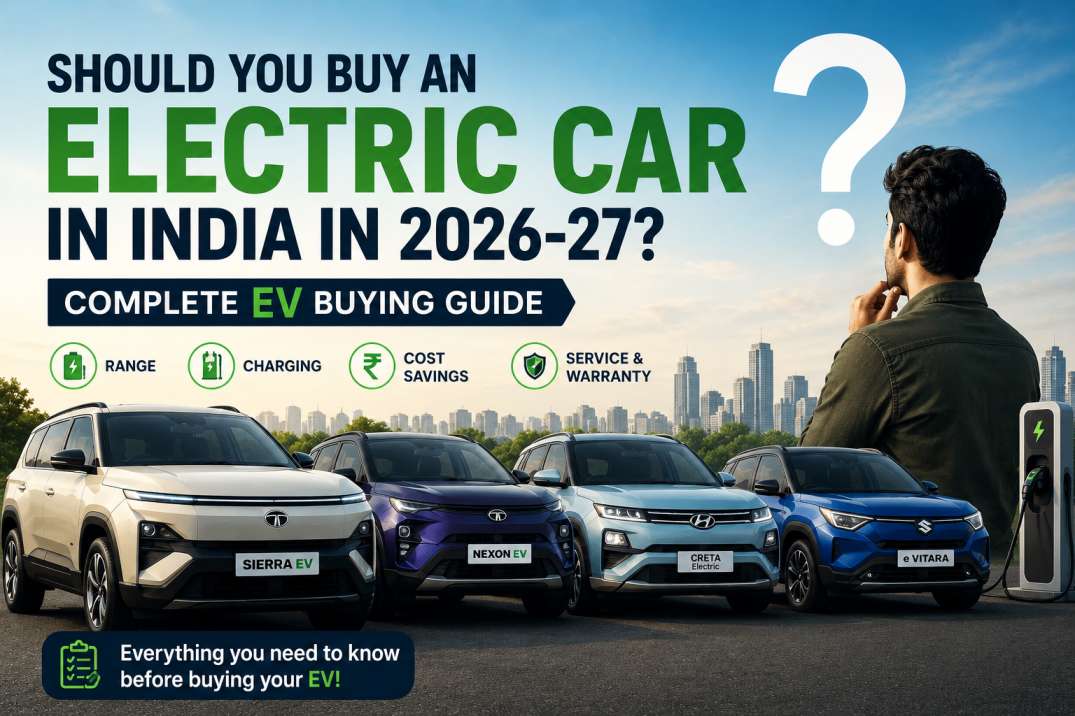
How to Buy an Electric Car in India (2026-27): The Complete EV Buying Guide
A few years ago, buying an electric car in India felt like a leap of faith.
Charging stations were limited, choices were few, and most buyers worried about running out of charge before reaching their destination.
Fast forward to 2026, and the conversation has changed dramatically.
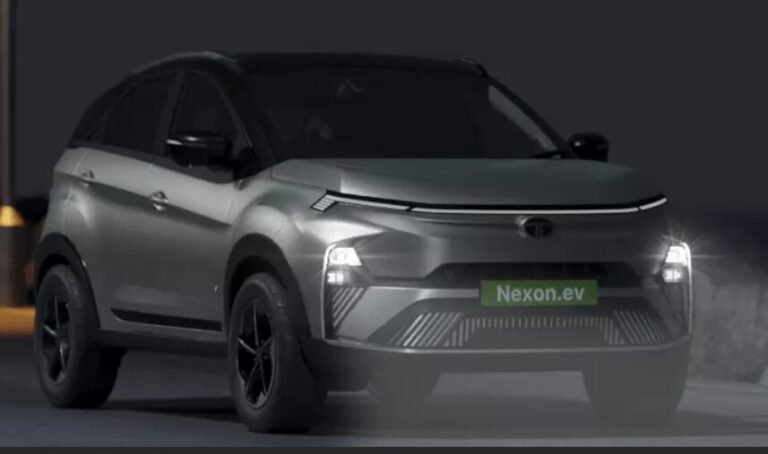
Today, buyers can choose from affordable EVs like the Tata Tiago EV, practical family SUVs such as the Tata Nexon EV and Hyundai Creta Electric, and long-range premium options like the Mahindra BE 6 and Mahindra XEV 9e. Maruti Suzuki has also entered the EV market with the e Vitara, giving Indian buyers more choice than ever before. EV adoption continues to accelerate as charging infrastructure expands and manufacturers compete aggressively across price segments.
But buying an EV is a fundamentally different decision from buying a petrol car. The checklist is different, the costs are structured differently, and the questions you need to ask at the dealership are completely different. This guide walks you through every step, from figuring out whether an EV fits your lifestyle to driving one home with maximum savings.
Is an EV Right for You? Answer These 5 Questions First
Before comparing models and prices, be honest with yourself about these five questions. They will save you months of post-purchase regret.
1. Do you drive more than 40 km daily? If yes, an EV almost certainly makes financial sense. Electricity costs ₹1-2 per km versus ₹6-10 per km for petrol. High-mileage city drivers recover the price premium faster, often within 3-4 years.
2. Do you have a dedicated parking spot at home or office? This is arguably the most important question. Owning an EV becomes incredibly convenient when you can charge it at home. Instead of visiting a fuel station every week, you simply plug the car in overnight and wake up to a full battery each morning.
If you live in an apartment, check whether your society allows charger installation and whether your parking spot has access to electrical power.
3. What Does Your Typical Long-Distance Drive Look Like? Most popular EVs in India today deliver 200-400 km of real-world range. Vehicles like the Tata Nexon EV, Hyundai Creta Electric, Mahindra BE 6 and XEV 9e have made long-distance travel much more practical than before. If you regularly drive 300+ km in a single stretch on routes with limited charging infrastructure, you need to plan more carefully.
For most urban families, however, range anxiety is becoming less of a concern than it once was.
4. Does your city have decent charging coverage? India’s charging network has expanded rapidly over the last few years, with public charging stations growing from roughly 5,000 in 2022 to more than 27,000–29,000 by 2025–26.
Before buying an EV, spend 10 minutes checking charger availability on apps such as Tata Power EZ Charge, Statiq, ChargeZone, Bolt.Earth, or MG’s charging network.
5. Are you planning to own the car for at least 5 years? EVs reward longer ownership. Buyers who switch cars every 2–3 years rarely fully recover the upfront premium through fuel savings.
An EV might be the right fit for your lifestyle. Now let’s walk through the key steps every buyer should follow before booking their first electric car.
Step 1: Set Your Budget Realistically

Once you’ve established that an EV fits your lifestyle, the next step is deciding how much you’re comfortable spending.
One mistake many first-time EV buyers make is focusing only on the ex-showroom price. The actual ownership cost includes insurance, charger installation, accessories, financing costs, and long-term running expenses.
The good news is that the EV market now offers options across almost every budget.
Under ₹10 Lakh
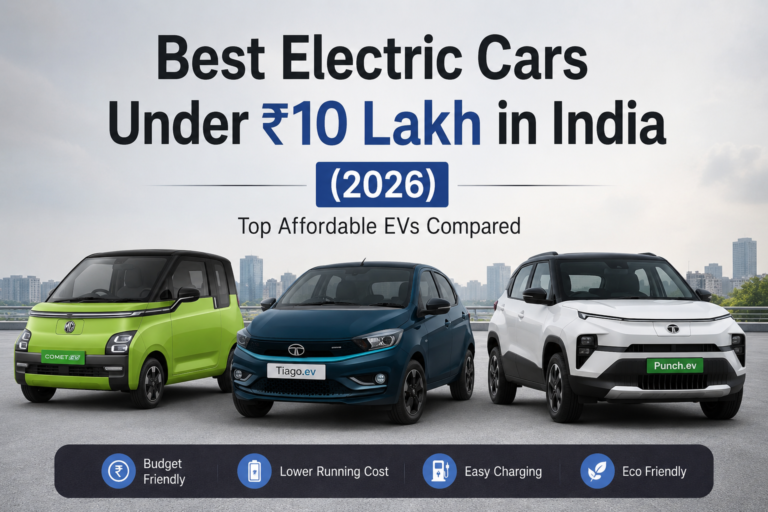
If you’re looking for an affordable city commuter, options like the Tata Tiago EV and MG Comet EV have made EV ownership accessible to a much wider audience.
Check out top 10 EVs in India under 10 Lakh
These cars are ideal for:
- Daily city commuting
- Office travel
- Small families
- First-time EV buyers
₹10–20 Lakh
This is currently the sweet spot of the Indian EV market.
Vehicles such as the Tata Punch EV, Tata Nexon EV, Hyundai Creta Electric and Maruti Suzuki e Vitara offer a combination of practicality, range and modern features. Maruti’s e Vitara has also brought the country’s largest service network into the EV space, addressing one of the biggest concerns many buyers previously had.
Above ₹20 Lakh
Premium buyers now have more choices than ever.
The Mahindra BE 6, Mahindra XEV 9e and BYD’s offerings provide long driving ranges, faster charging capabilities and premium features that were once reserved for luxury brands.
The key is to buy an EV that suits your actual needs rather than stretching your budget for range or features you may rarely use.
Step 2: Understand Real-World Range
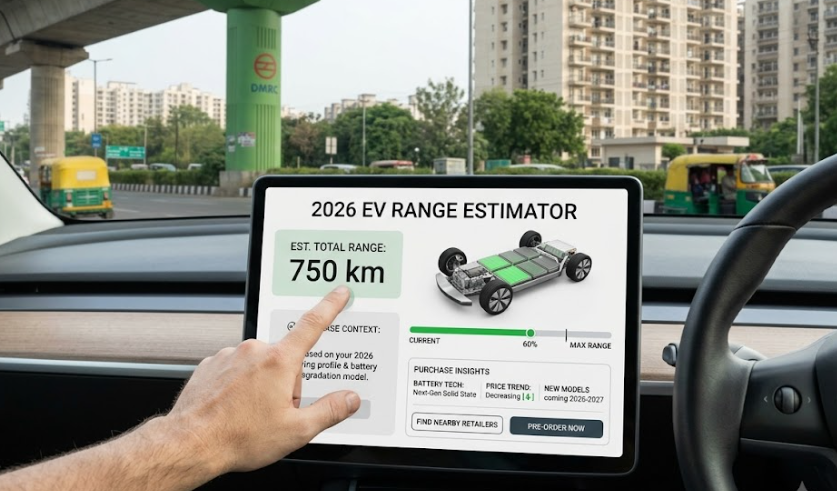
Range remains one of the most discussed aspects of EV ownership.
However, the biggest mistake new buyers make is treating the claimed range as the range they will get every day.
Manufacturers test EVs under controlled conditions. Real-world range depends on several factors:
- Driving style
- Traffic conditions
- Air-conditioning usage
- Highway speeds
- Passenger and luggage load
- Outside temperature
As a practical rule, expect around 70–80% of the claimed range in normal usage.
For example:
- 300 km claimed range = roughly 220–250 km real-world range
- 500 km claimed range = roughly 350–400 km real-world range
Instead of asking “What is the maximum range?”, ask:
“Can this EV comfortably handle my weekly routine?”
For most buyers, that’s the more important question.
Step 3: Sort Out Charging Before You Buy
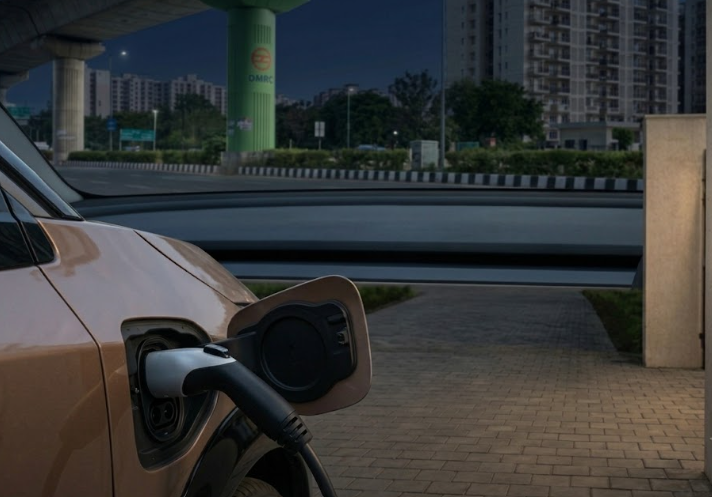
Charging is where EV ownership becomes very different from petrol ownership.
The best EV experience comes when charging becomes part of your routine rather than something you actively think about.
Home Charging
Home charging remains the easiest and most economical option.
Most EV owners charge overnight and start every morning with a near-full battery.
Benefits include:
- Lower charging costs
- Greater convenience
- Reduced dependence on public chargers
Home charging is also becoming easier to install as automakers increasingly offer charger installation assistance.
Apartment Charging
If you live in an apartment complex, verify:
- Parking allocation
- Society approval process
- Electrical load availability
Many housing societies across India are now actively supporting EV charger installations, but it’s always better to confirm before booking the vehicle.
Public Charging
India’s charging infrastructure has expanded significantly over the past few years. Government initiatives and private operators continue to increase charger availability across cities and highways. More than 29,000 public charging stations have been installed across the country, with additional deployment planned under the PM E-DRIVE programme.
Before buying an EV, spend a few minutes checking charging apps such as:
- Tata Power EZ Charge
- Statiq
- ChargeZone
- Bolt.Earth
Check your:
- Daily commute route
- Office location
- Weekend travel destinations
If chargers exist where you regularly drive, ownership becomes significantly easier.
Step 4: Take a Proper Test Drive
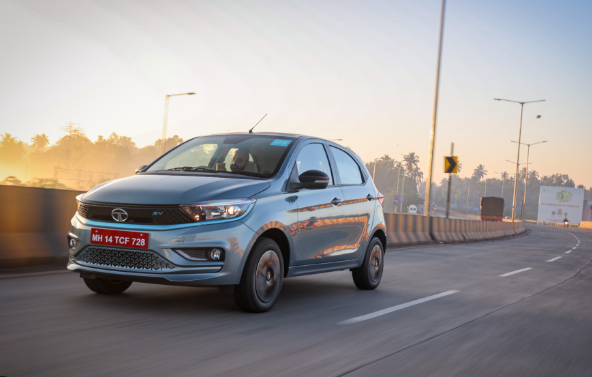
A 10-minute dealership test drive rarely tells the full story.
When test-driving an EV, focus on ownership experience rather than acceleration numbers.
Things to check:
Ride Quality
Indian roads can be challenging.
Drive over:
- Speed breakers
- Broken surfaces
- Potholes
A comfortable suspension matters more than a quick 0–100 km/h time.
Regenerative Braking
Most EVs offer different levels of regenerative braking.
Some allow almost one-pedal driving in city traffic.
Spend time understanding how the system feels.
Cabin Experience
EVs are naturally quieter than petrol cars.
Pay attention to:
- Road noise
- Wind noise
- Seat comfort
- Visibility
You’ll experience these every day.
Questions to Ask the Dealer
- What is the battery warranty?
- How many service centres are available nearby?
- Does the vehicle receive OTA software updates?
- What is included in charger installation?
Step 5: Understand Ownership Costs
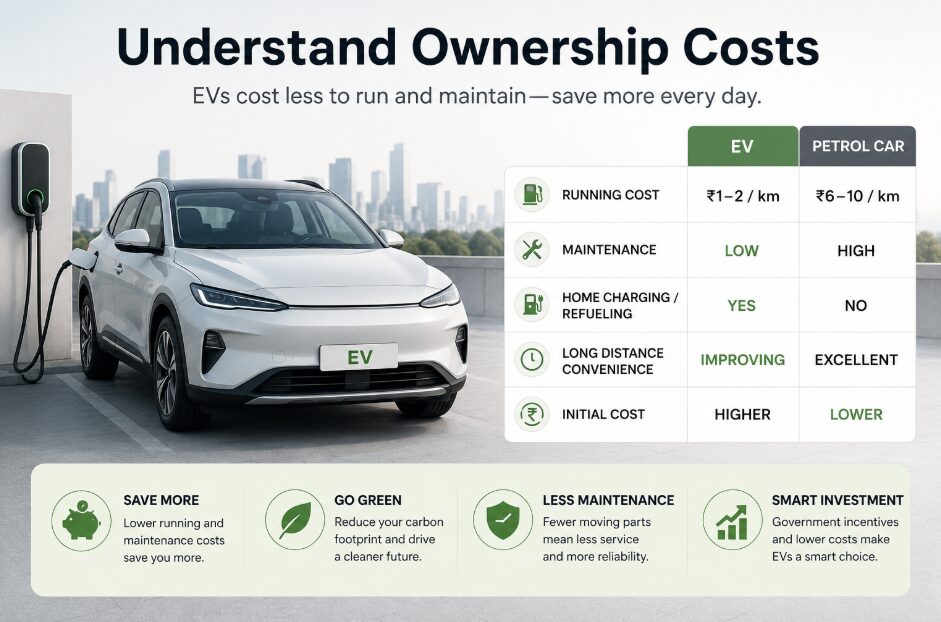
The real advantage of EVs appears after purchase.
Lower Running Costs
For buyers charging at home, electricity generally costs around ₹1–2 per kilometre.
A petrol vehicle typically costs ₹5–10 per kilometre depending on fuel prices and fuel efficiency.
For someone driving 1,000–1,500 km every month, these savings can add up quickly over a five-year ownership period.
Lower Maintenance
Electric cars have fewer moving parts than conventional vehicles.
There is:
- No engine oil
- No clutch
- Fewer filters
- Less routine servicing
This often results in lower maintenance costs throughout ownership.
Common Mistakes First-Time EV Buyers Make
Even as EVs become mainstream, some mistakes remain surprisingly common.
1. Buying Based Only on Claimed Range
Always focus on real-world usage rather than brochure numbers.
2. Ignoring Charging Setup
An EV without convenient charging can quickly become frustrating.
3. Overestimating Highway Usage
Many buyers believe they frequently drive long distances when most journeys are actually local.
4. Not Checking Service Support
Always verify service centre availability before purchasing.
5. Buying More Battery Than Needed
A larger battery usually means a higher purchase price.
If most of your driving is within the city, a smaller battery may provide better value.
Should You Buy an EV in 2026–27?
For many Indian buyers, the answer is now yes.
Charging infrastructure is expanding, vehicle choices are improving, and automakers are investing heavily in electric mobility. India has already crossed 29,000 public charging stations and plans to add many more over the coming years.
The biggest shift, however, is not technological.
It’s practical.
EVs are no longer products designed only for early adopters or technology enthusiasts.
For city commuters, families and long-term owners, they have become a genuinely sensible alternative to petrol vehicles.
The key is not choosing the EV with the biggest battery or the highest claimed range.
The key is choosing the EV that matches the way you actually drive.
Get that decision right, and your next car could be cheaper to run, easier to live with and better suited to the future of mobility in India.
Upcoming EVs to Watch in India
If you’re not in a hurry to buy a car immediately, the next 12–18 months could bring some exciting new electric vehicles to the Indian market.
Manufacturers are investing heavily in EV technology, and several highly anticipated launches are expected to expand buyer choice across different price segments.
Some of the most talked-about upcoming EVs include:
- Tata Sierra EV – Tata’s iconic Sierra nameplate is making a comeback in electric form and is expected to compete with the Hyundai Creta Electric, Maruti e Vitara and Mahindra BE 6.
- Tata Avinya – Tata’s futuristic EV concept is expected to showcase the brand’s next-generation electric technology and design philosophy.
- VinFast VF 6 and VF 7 – The Vietnamese EV maker is preparing to enter India with feature-rich electric SUVs aimed at the mass-premium segment.
- MG Cyberster – A fully electric roadster that could bring sports-car excitement to India’s growing EV market.
- BYD’s Future Hybrid and EV Models – Following the introduction of its DM-i technology, BYD is expected to expand its Indian portfolio with more electrified offerings.
- Mahindra’s Expanding EV Range – Following the success of the BE 6 and XEV lineup, Mahindra continues to invest heavily in born-electric SUVs and new products built on its INGLO platform.
However, waiting forever for the “next big launch” is rarely the best strategy.
If an EV available today meets your requirements for range, charging convenience and budget, it often makes more sense to start enjoying the savings immediately rather than postponing your purchase for a model that may arrive months later.
Final Thought
The Indian EV market is evolving faster than ever. New models, better battery technology and expanding charging infrastructure are making electric cars a practical option for a growing number of buyers. The best EV isn’t necessarily the newest one, it’s the one that fits your driving habits, budget and lifestyle today.
One Comment