EV Charging in India: Complete Guide 2026
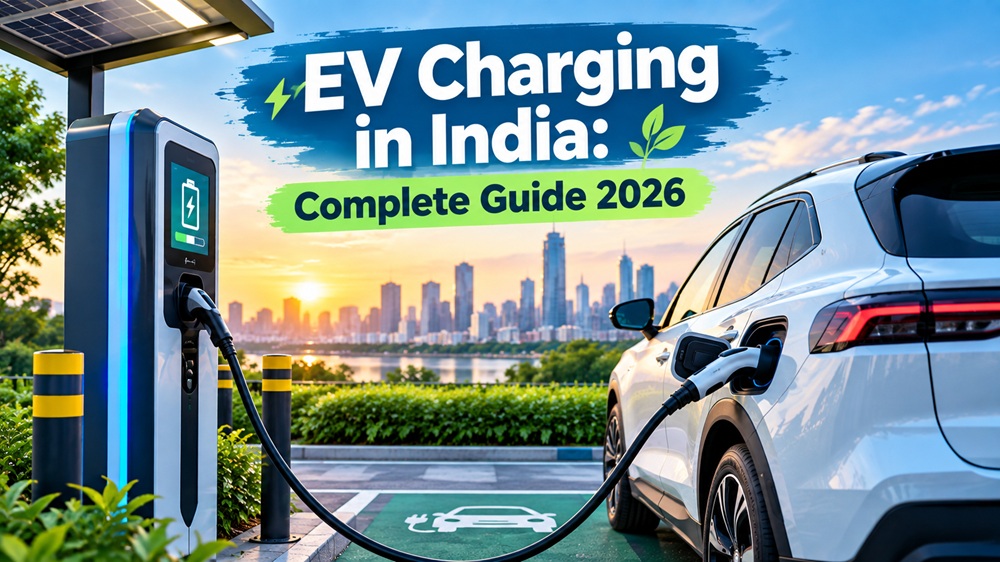
EV Charging in India has become more accessible as electric vehicle adoption continues to grow across the country. From convenient home charging to fast public charging stations, EV owners now have multiple charging options depending on their vehicle, battery size, driving habits and budget.
If you are still comparing models, our guide to best electric cars in India can help you understand the wider EV market.
Understanding how EV charging works can help you choose the right charger, estimate charging time and manage your running costs more effectively.
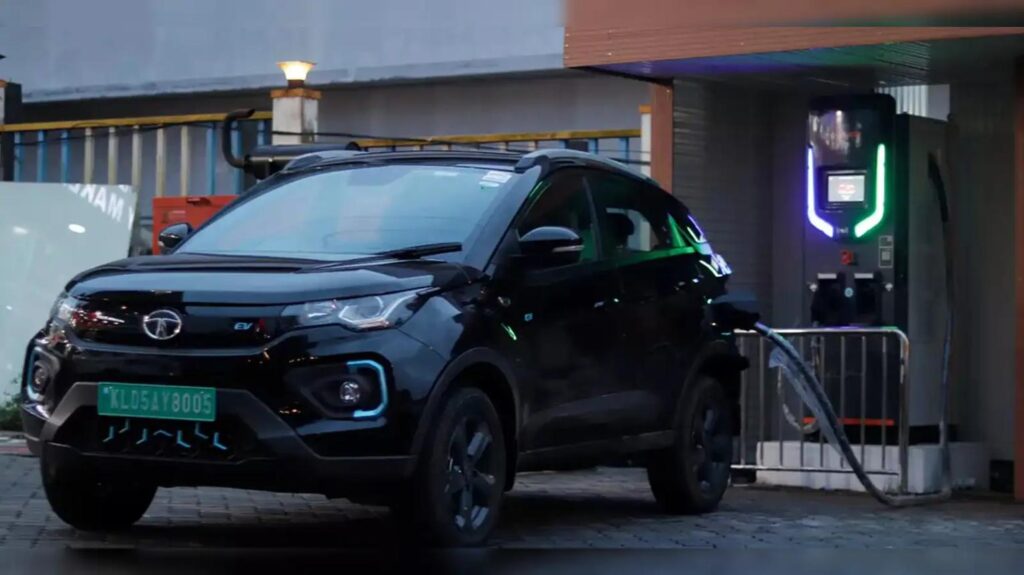
This guide explains how EV charging works in India, charging times, costs, connectors, public charging stations, home charger installation, government infrastructure and everyday charging habits.
EV Charging in India: How It Works
EV charging can broadly be divided into AC charging and DC fast charging.
With AC charging, alternating current is converted into usable DC electricity by the vehicle’s onboard charger. With DC fast charging, direct current is supplied to the vehicle through the external charging unit.
In both cases, the vehicle’s own charging limit determines the actual speed.
AC vs DC Charging
| Charging Type | Typical Location | Best Use | Main Limitation |
|---|---|---|---|
| Portable or low-power AC | Home or occasional workplace use | Overnight charging and small top-ups | Slowest option; installation quality matters |
| AC wallbox | Home, office, hotel or destination parking | Routine daily charging | Limited by the car’s onboard AC charger |
| Public DC fast charging | Highways, malls, dealerships and fuel stations | Road trips and quick top-ups | Higher cost, queues and charging tapering |
| Battery swapping | Selected two- and three-wheeler ecosystems | Fast turnaround for compatible fleets | Battery format and network compatibility are limited |
For most private EV owners, home EV Charging in India is the routine anchor. DC fast charging provides flexibility for longer journeys, but using it for every charging session can cost more and involve waiting.
EV Charging Connectors and Standards in India
India’s official e-AMRIT portal identifies IS 17017 as the key family of EV-charging standards covering system, AC, DC, communication and connector requirements. It also notes that CCS charging communication uses the IS 15118 series.
For electric cars, CCS2 is the connector most buyers are likely to encounter at public DC fast-charging locations.
Smaller two- and three-wheelers can use different light-EV charging arrangements, so check the vehicle manual rather than assuming that a car connector will fit.
The Ministry of Heavy Industries’ PM E-DRIVE operational guidelines list light-EV DC and AC/DC combo standards for e-2Ws and e-3Ws up to 12 kW.
The PM E-DRIVE operational guidelines list CCS-II DC charging from 50 kW to 250 kW for e-4Ws and e-buses or trucks.
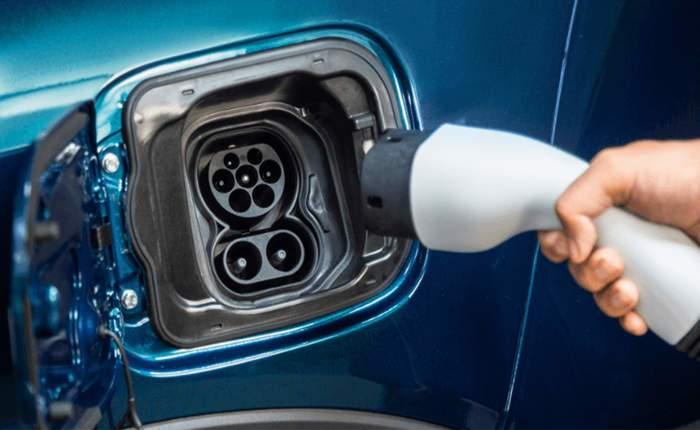
Before a journey: Confirm the connector type, the vehicle’s maximum AC/DC input and the charger’s live availability in the operator’s app.
How Long Does EV Charging Take?
A simple way to estimate charging time is:
Charging time ≈ Energy added in kWh ÷ Charging power in kW
For example, adding 20 kWh using a 7.2 kW AC charger takes a little under three hours in an ideal calculation.
Real-world charging can take longer because of:
- Charging losses
- Battery temperature
- State of charge
- Battery-management systems
- Power limitations
- Charging tapering near a high state of charge
DC fast charging is generally quickest between roughly 10% and 80%, after which charging power can reduce significantly.
Example: 40 kWh Battery
A 40 kWh battery receiving 7.2 kW could theoretically require around six hours for a substantial charge.
A suitable 60 kW DC charger can add the same amount of energy much faster.
However, a car limited to 30 kW DC charging will not charge at 60 kW simply because it is connected to a 60 kW charging station.
The vehicle’s maximum charging capability remains the limiting factor.
Home EV Charging Time in Practice
Most EV owners do not need to charge from empty to 100% every night.
For example, if your daily commute uses around 10 kWh, an overnight AC charging session can comfortably replace that energy.
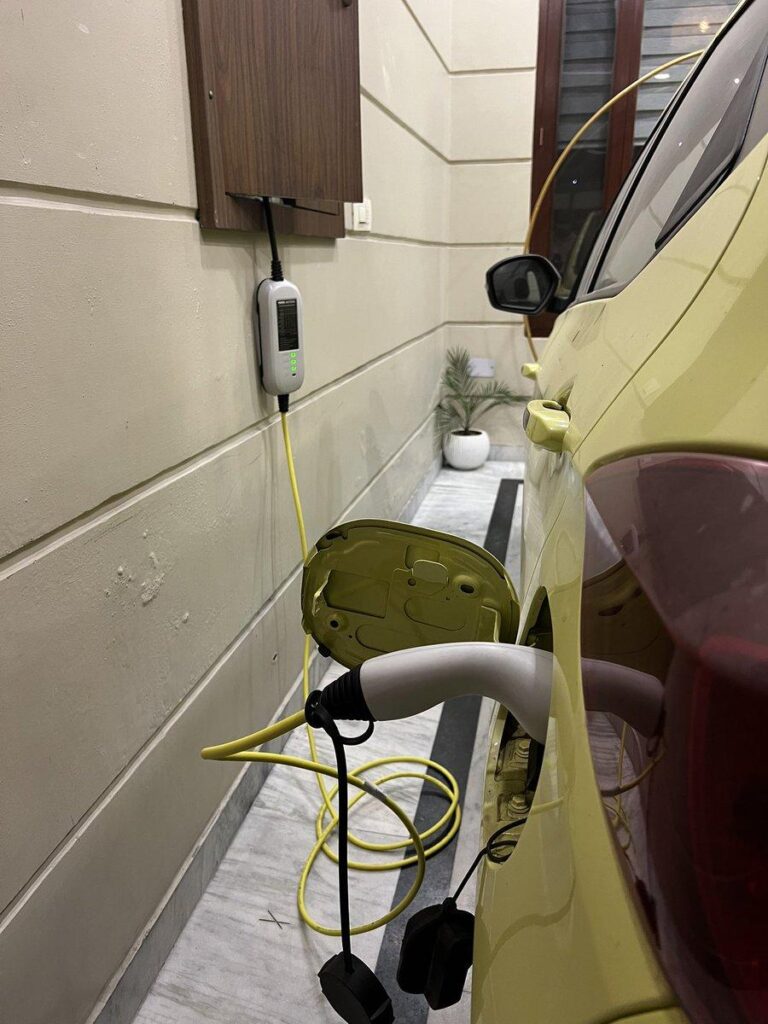
Follow the vehicle manufacturer’s recommendations for routine charging limits and full charging before longer journeys.
Why Charger Power Matters
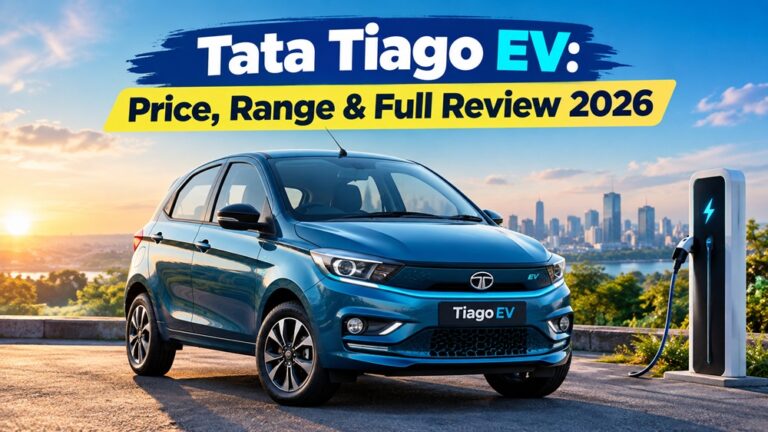
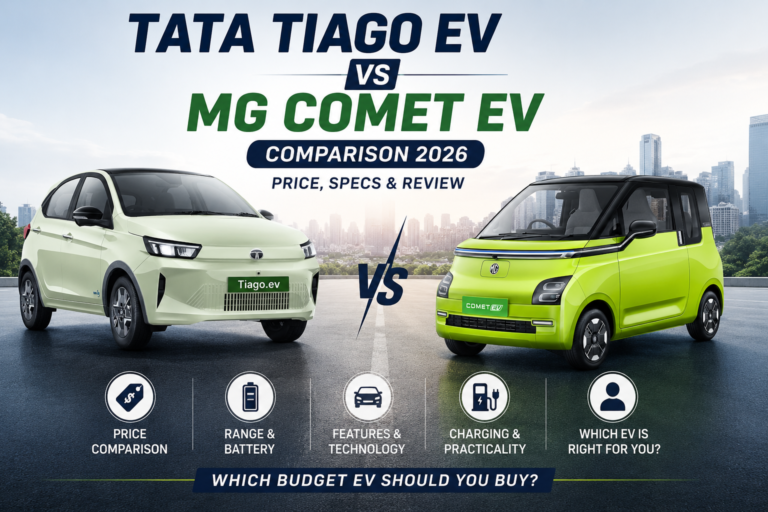
The Tata Tiago EV 2026 review illustrates why charger specifications matter.
The same model can have different AC charging times depending on whether it is equipped with a 3.3 kW or 7.2 kW setup, alongside its DC fast-charging capability.
This is why buyers should look beyond battery capacity and advertised range when comparing EVs.
The Tata Tiago EV 2026 review illustrates why charger specifications matter, particularly when comparing AC and DC charging options.
What Does EV Charging Cost in India?
There is no single national EV charging price.
Home charging is generally based on the household electricity tariff and any applicable fixed charges.
Public charging may include:
- Operator charging rates
- Session fees
- Parking fees
- Taxes
- Time-based charges
- Other applicable service charges
Rates can vary by:
- State
- Charging location
- Operator
- Charger capacity
- Network
- Time of use
Example of EV Charging Cost
If an EV adds 40 kWh at an effective rate of ₹8 per kWh, the energy component would be approximately:
40 × ₹8 = ₹320
This is only an illustration. Actual household electricity costs can vary because of electricity slabs, fixed charges, charging losses and local tariffs.
Public charging sessions may cost more because operators also have equipment, software, maintenance, parking and infrastructure expenses.
Charging-cost tip: Check whether the public charger charges per kWh, minute or session. Also check whether parking fees continue after the charging session ends.
Keep the operator’s helpline details available and identify a backup charging station before starting a longer journey.
Finding Public EV Charging Stations in India
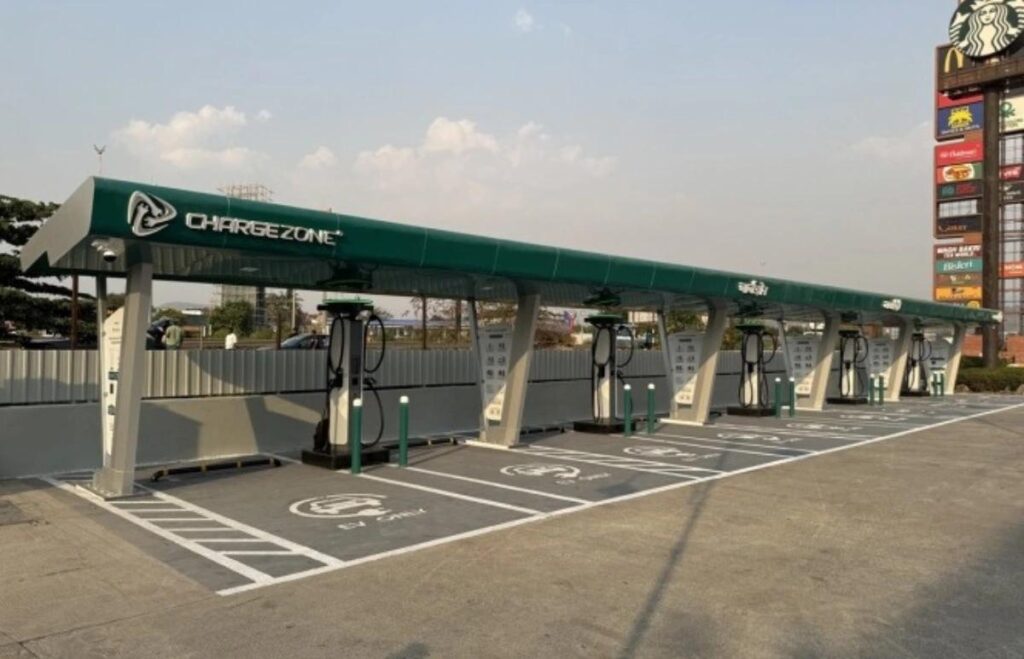
India’s public charging ecosystem includes:
- Oil marketing companies
- Automobile manufacturers
- Independent charging operators
- Shopping malls
- Workplaces
- Hotels
- Fleet depots
- Government-supported charging locations
The Bureau of Energy Efficiency (BEE) is the Central Nodal Agency for public EV-charging infrastructure, while states appoint their own nodal agencies.
BEE also provides the EV Yatra portal for charging-infrastructure information.
A 27 March 2026 PIB release reported 27,737 EV public charging stations installed by Oil Marketing Companies, of which 22,753 were operational as of 1 March 2026.
The release states that its figures are based on OMC information. It also notes that setting up charging stations is an unlicensed activity in which private entrepreneurs can participate.
Important: The 27,737 figure should therefore not be interpreted as a complete national count of every private charger, apartment charger or charging point in India.
What to Check Before a Road Trip
Before relying on a public charger, check:
- Live availability
- Connector type
- Charging power
- Operating hours
- Current pricing
- Location
- Payment method
- Backup charging station
In busy regions such as Gurgaon and Delhi-NCR, traffic, queues and charger demand can affect the time saved by fast charging.
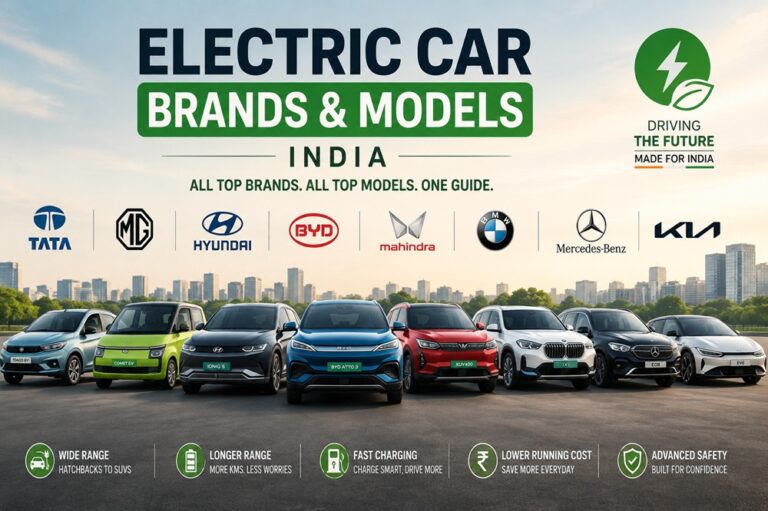
You can also compare charging requirements alongside vehicle size and range in our MG Comet EV 2026 review and electric car brands and models in India guide.
How to Install a Home EV Charger Safely
A home EV charger should be treated as a dedicated electrical installation, not simply another appliance plugged into a household socket.
A qualified electrician or authorised installer should check:
- Sanctioned electrical load
- Cable size
- Earthing
- Protection devices
- Cable routing
- Weather exposure
- Charger installation requirements
- Local electrical requirements
Avoid Unsafe Charging Practices
Do not use:
- Extension boards for regular EV charging
- Damaged charging cables
- Loose electrical sockets
- Improvised adapters
- Unapproved electrical connections
Keep charging connectors clean and dry.
Stop charging if you notice:
- Unusual heat
- Burning smell
- Arcing
- Repeated electrical tripping
- Visible cable or connector damage
Safety warning: Never charge an EV in a flooded area or where electrical equipment may come into contact with standing water.
Smart Charging Habits for Indian EV Owners
Good charging habits can make everyday EV ownership more convenient.
Charge at Home When Possible
Use home AC charging as your primary charging method when you have suitable parking and electrical capacity.
Reserve DC fast charging mainly for:
- Road trips
- Unexpected longer journeys
- Quick top-ups
- Situations where home charging is unavailable
Keep a Range Buffer
Avoid planning every journey around the maximum advertised range.
Hot weather, traffic, air-conditioning use, high speeds and payload can affect energy consumption.
Maintaining a reasonable battery reserve is particularly useful when travelling between cities where charging infrastructure may be less predictable.
Move Your Vehicle After Charging
At busy public stations, move the vehicle once charging is complete so another driver can use the charger.
Also:
- Report faulty chargers through the operator’s app
- Keep charging apps updated
- Keep payment methods ready
- Check charger status before leaving
- Maintain a backup charging option on longer journeys
EV Charging in India 2026: What Buyers Should Consider
Charging infrastructure should be part of the EV buying decision, not an afterthought.
Before purchasing an EV, consider:
- Where will you charge most often?
- Do you have dedicated parking?
- Can your home electrical connection support the charger?
- What is the vehicle’s maximum AC charging rate?
- What is its maximum DC fast-charging rate?
- Which connector does it use?
- How much energy do you use each day?
- Are public chargers available along your regular routes?
- How much does your preferred charging network cost?
- What happens if your preferred charger is unavailable?
These questions can be just as important as the vehicle’s claimed range.
FAQ: EV Charging in India 2026
Is Home Charging Cheaper Than Public EV Charging?
Usually, home charging is more predictable and may be cheaper because it uses the household electricity tariff.
Public charging can include operator fees, parking charges, taxes and infrastructure costs.
Compare the complete session price rather than looking only at the advertised electricity rate.
Can Every EV Use a Fast Charger?
No.
The EV must support the charger’s connector and charging protocol, while the vehicle’s battery-management system determines the maximum power it can accept.
Always confirm compatibility using the owner’s manual and the charging operator’s app.
Is DC Fast Charging Bad for an EV Battery?
Occasional DC fast charging is part of normal EV use when supported by the manufacturer.
However, frequent high-power charging, high temperatures and keeping the battery at a very high state of charge for extended periods can affect battery ageing.
Follow the manufacturer’s charging recommendations and use AC charging for routine needs when convenient.
How Many Public EV Chargers Are There in India in 2026?
A March 2026 PIB release reported 27,737 OMC-installed EV public charging stations, with 22,753 operational as of 1 March 2026.
This is an OMC-reported measure and should not be treated as a complete national count of every public and private charging point.
What Should I Check Before Buying an EV?
Check whether you have:
- Reliable parking for home charging
- Adequate electrical load
- Suitable charging equipment
- Access to public chargers
- Compatible connector types
- Sufficient AC/DC charging capability
- A suitable daily driving range
- Appropriate battery and vehicle warranty coverage
Also check public charging availability along your regular routes before choosing an EV.
How Much Does It Cost to Charge an EV at Home?
Home charging cost depends primarily on the amount of electricity added and your local electricity tariff.
For example, adding 40 kWh at an effective ₹8 per kWh would cost approximately ₹320 in energy charges, before considering other household billing factors and charging losses.
Can I Charge My EV Every Night?
Yes, routine overnight charging is common for EV owners when using an appropriate home charging setup.
However, follow the vehicle manufacturer’s recommendations regarding charging limits and battery care.
Final Verdict
EV charging in India is becoming more accessible, but successful EV ownership still depends on matching the vehicle to your parking situation, electricity supply and travel pattern.
Home AC charging offers everyday convenience, while public DC fast charging provides flexibility for longer journeys and quick top-ups.
Before buying an EV, ask where you will charge most often, whether your home electrical setup can support the required equipment, and whether the vehicle can use the public charging network available along your regular routes.
A good EV charging strategy is ultimately about convenience, compatibility, cost and planning rather than simply choosing the fastest charger available.
References
[1] BIS Standards for Electric Vehicle Charging, e-AMRIT, NITI Aayog and UK Government.
[3] Tata Tiago.ev Official Overview, Tata.ev.
[4] E-Mobility, Bureau of Energy Efficiency, Government of India.